
Jenny Stock
From the 25th to the 27th of March 2026, the Leibniz Institute for the German Language (IDS), under the stewardship of Florence Oloff, Silke Reineke, and Uwe-Alexander Küttner, hosted the 25th Conference on Discourse and Conversation Analysis (25. Arbeitstagung zur Gesprächsforschung (AGF)). 88 registered participants from more than ten different countries and diverse disciplinary backgrounds (expanded to roughly 100 through the episodic participation of IDS colleagues) assembled in Mannheim for three days of inquiry on the theme “Technology use and social interaction: New interactive practices, new data and methods”.
Framed by the increasing salience of technologies and smart appliances in our day-to-day lives, the conference distributed its central question of how technology is used in and for social interaction across 4 keynotes, 27 presentations, 6 methodological input talks, 5 data sessions, and 3 workshops. The contributions were grounded in empirical data from institutional, professional or everyday settings – some more naturalistic and others more experimental – and clustered around sequence organization, task-driven encounters, appropriation, participation, agency, and new types of data and data collection.
Four keynote talks provided a scaffold for the program. Stefan Habscheid opened the conference on Wednesday with reflections on the “domestication” (Hartmann, 2023) of digitally networked home assistance systems. Guiding us through entertaining video recordings of people at home interacting with smart speakers and smart kitchen appliances, he grounded space, materiality, and sensoriality in CA and pointed us to the mutual adaptation of users and technologies in multimodal interaction. Wyke Stommel’s lecture on Thursday morning problematized our field’s tendency to examine interaction within isolated technologies or modalities, and proposed to focus on more overarching interactional rules related to when and what to communicate in what manner, asking how the omnipresence of communication media is relevant to participants’ everyday interactional practices. With data from foster care settings, messages between parents and their child’s therapist, and Tinder messages, she showed how participants orient to the relationships between different communication media in organizing their interactional practices and pointed to interactional order across technologies, resonating with Harvey Sacks’ point (see image 1) that even technical settings are “made at home with the rest of our world” (Sacks, 1992, p. 548).
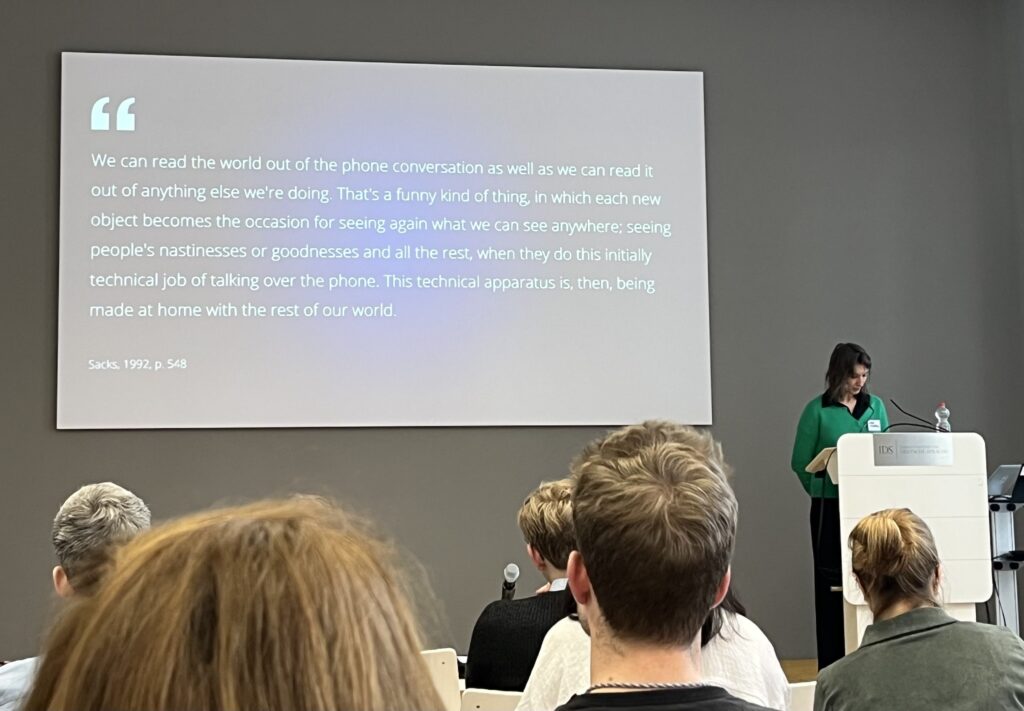
Image 1. Sacks’ quote during Wyke Stommel’s keynote presentation.
On Thursday afternoon, Katharina König took us through her analysis of 39 instances of the German greeting “huhu” in 28 digital interactions, asking what this form accomplishes within the particular ecology of messaging chats. She demonstrated how interactional resources are adapted from mundane face-to-face interaction to accomplish tasks specific to digital, posting-based interaction. The program concluded on Friday afternoon with a final keynote by Saul Albert, who sent us off with a better understanding of practices of repair in talk to, at, or around ‘AI’ technologies in a range of settings involving disabled people. More food for thought emerged in the ensuing Q&A discussion: Can terminology such as “atypical interaction” adequately capture participants’ own normative understanding, given that such interactions are, for them, entirely typical?
The main body of the programme unfolded in parallel sessions (two at a time), with presentations thoughtfully organized along thematic lines, such as, but not limited to, sensemaking of- and decision-making with and through technology; disruptions, repair practices, and enabling joint access in video-mediated settings; (non-)alignment in task-based human-robot interaction; bodies and spaces in VR/XR environments; and conceptual questions regarding practices with AI. As so wonderfully afforded by the breadth of our field, one of the bigger pleasures of the conference was the striking diversity of materials. Across the presentations, we were treated to a rich trove of data that, despite coming from very different settings and modalities, sat together remarkably well within the shared frame of the conference.
To give a glimpse into the kinds of data we had the pleasure of looking at, Samira Ibnelkaïd presented Instagram reels of people humorously documenting and reflecting on their interactions with LLMs. One reel showed a user requesting a series of French accents from ChatGPT, which the system readily produced, until asked for a Senegalese French accent, at which point the system responded, “I prefer to remain neutral and respectful of all cultures.” Ibnelkaïd drew attention to the selective invocation of “culture” only when mentioning the Global South and the pseudo-neutrality in LLM outputs.
Ali Reza Majlesi provided a memorable case of high school students interacting with a humanoid robot that, unbeknownst to them, was programmed to confuse them when solving a geometry problem. With the majority of students producing alignment with the robot’s intentionally flawed formulation of the solution, the data invite reflection on the fragility of the display of knowledge and how it can be undermined through normative expectations built into social interactions.
Hilla-Marja Honkalammi’s data likewise featured human-robot interaction, including a case in which the robot failed to register the human input and repeatedly restarted the sequence after long pauses. The prolonged gaps between turns were certainly painful to watch as an interactionally competent audience, but the data nicely made visible how sequential coherence relies on human participants’ ongoing adjustment and responsibility-taking.
Further datasets included VR-arcade game sessions (Liliana Lovallo), artistic experiments with XR (Lorenza Mondada, Yujin Shin, Monica Simone), video calls between friends (Christian Licoppe), digital prescriptions in pharmacy visits (Sam Schirm), video-assisted referee interventions during football matches (Mehmet Ali Içbay), smartphone use during mealtime conversations between friends (Hayate Kasataka), and many more.
In addition to these presentations, the conference provided participants a space for hands-on engagement with one another’s data, work, and methods during five parallel data sessions that brought the first day to a close and three workshops that concluded the second day. Across the data sessions, attendees examined quite an eclectic array of data where interactional parties extended even beyond the living: smartphone-mediated problem-solving interactions (Helena Budde), Ouija board séances (Marlou Rasenberg, Wyke Stommel, and Mark Dingemanse), multilingual mediation discussions (Annukka Saarenmaa), corporate, leaked email archives (Borbala Sallai), and social media videos of public harassment (Jenny Stock).
The workshops offered participants the chance to develop their practical analytic skills: Those attending Lorenza Mondada’s workshop on multimodal collections left with tools for identifying systematicities in complex embodied practices (practiced on data of radio interviewers approaching passers-bys), while Richard Ogden’s session provided hands-on experience and guidance on working on the phonetics of non-lexical vocalisations. A third, parallel workshop, led by Mark-Christoph Müller, Mia Schürmann, Siegwalt Lindenfelser, and Elena Frick, equipped participants with practical knowledge of the Database for Spoken German.
Further questions were taken up in the methodological input talks that carried the program forward on Friday morning. Six fast-paced yet substantive contributions addressed some methodological key challenges and opportunities that arise in the study of technology in and for interaction. Among them, Sylvia Bendel Larcher and Esther Galliker advocated for new transcription conventions suited to screen-based data, such as a separate transcription line for cursor movements. Marlén Jacobshagen, Hannah Sawall, and Miriam Lind had the audience in awe as they introduced a recording device they had designed for private households, specifically with data privacy and participant autonomy in mind. The small, unobtrusive device automatically activates upon detecting speech or other relevant sounds, stops recording 30 seconds after the last activation, and gives participants full control to delete recordings before they are accessed by researchers, which will likely pique considerable interest among CA researchers.
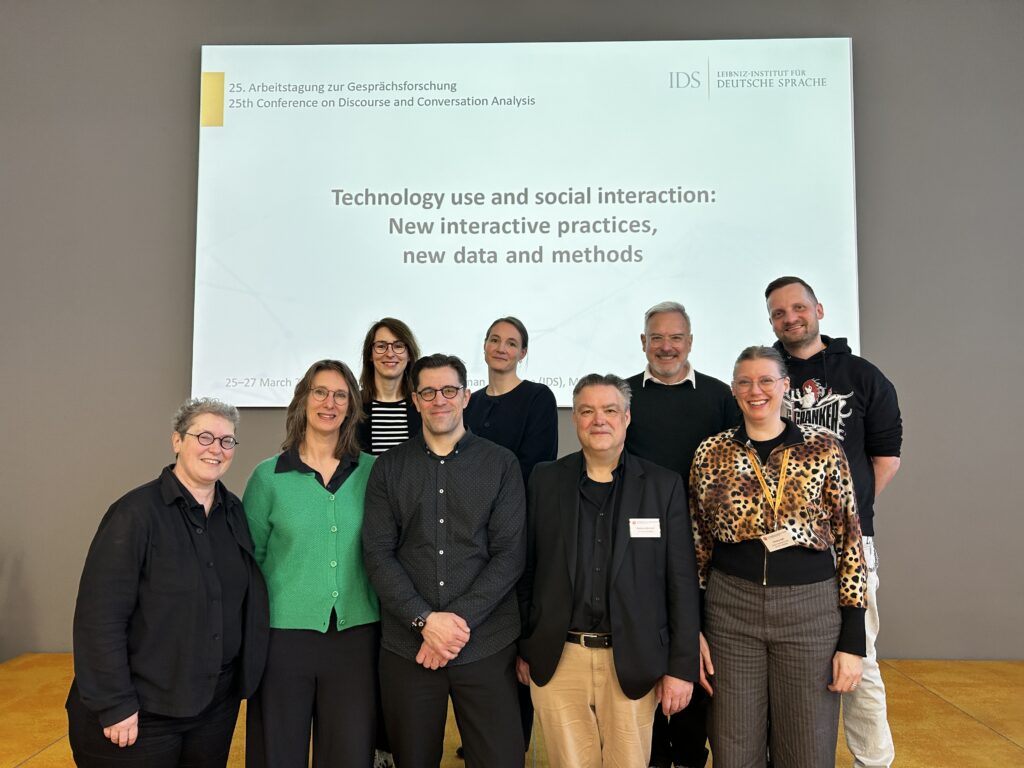
Image 2: Conference organizers, keynote speakers, and workshop organizers
© IDS
Two testimonials give voice to what appeared to be a broader chorus of consensus among participants on the conference’s overall excellence:
“Even though this was only my second time attending the AGF, as a conversation analyst working in and on German, this conference feels like a homecoming of sorts. By running this year’s conference in English and encouraging submissions from outside German-speaking research on interaction, the IDS was able to build on this homecoming feeling while still maintaining the same small-conference character the AGF is known for.”
– Sam Schirm
“For me as a PhD student in my first year, attending the 25th Conference on Discourse and Conversation Analysis at the IDS offered a wonderful overview of different areas of research on technology use in and for interaction. From smart devices and robots to ‘AI’ and interaction mediated through various technologies, the conference featured a wide variety of exciting projects and types of data. Ranging from keynote talks, research presentations, and short methodological input talks to workshops and data sessions, the diverse session formats ensured no one got bored. Engaging discussions between sessions and during Q&As made for a lively and intellectually stimulating, yet informal and friendly atmosphere. Overall, it was a great experience. And last but not least, the “tekkno-logy” playlist compiled by the organizers for the conference was a fun and original touch!”
– Borbála Sallai
[[ Note: the “tekkno-logy” playlist luckily remains available beyond the temporal bounds of the conference and can be accessed here: https://open.spotify.com/playlist/6cNnmRECBVIS9pN8HnRFwQ?si=ehwFENtdRfWLhn-a38noTg ]]
Of course, attendees were well catered for beyond the intellectual programme (and its accompanying soundtrack), with plenty of coffee and tea, juices, and snacks during breaks, as well as two organized dinners and a farewell lunch on the final day, all of which offered well-appreciated opportunities for informal co-presence outside the lecture halls. Overall, it was an engaging three days that generated a wealth of new ideas and a renewed sense of the field’s scope. What became perfectly plain after examining in detail the situated use of various technologies in social interaction or technology-mediated interactions from a sequential perspective is that this is a domain with ample room for further inquiry, yet one already firmly grounded in the rigorous contributions of its researchers. To close this report with a quote by Uwe-Alexander Küttner, part of the organizing team, whose reflection puts well into words the tenor of the conference:
“When we set out to organize this conference, we pictured a joint forum for interactional research on technology use in and for social interaction. The idea was to bring together researchers investigating the use of different technologies to discover common threads and themes in their work. We could not be happier with the result. Over three days, the conference was teeming with discussions, converging observations, and insights that connected otherwise disparate technologies. So, in addition to being about ‘technology use and social interaction’, this conference sparked plenty of ‘interactions about technology use’—providing the bridging forum that we had envisioned it to be.”