Gerardo Chávez-Lazo, Brunella Basile, Belén Muñoz, & Alonso Vásquez-Kanashiro
Secuenciando (‘sequencing’ in Spanish) is a student-led initiative founded in 2024 by Linguistics undergraduate students from Peru. The project aims to provide a space in which anyone interested from the Spanish-speaking community can join to learn and practice conversation analysis (CA) with other members. By exploring the literature and engaging with interactional data, we seek to become familiar with conversation-analytic notions and develop analytic skills grounded in close attention to social action. Rather than functioning as a formal training program, we developed Secuenciando as a collaborative environment oriented toward joint exploration and collective discussion.
The initiative was inspired by sustained participation in the Permanent Seminar for Conversation Analysis (SPAC). Informal post-session exchanges between some of its members based in Peru gradually highlighted the value of creating more locally organized spaces for continued analytic work and peer-based learning. In this context, Secuenciando was established by undergraduate Linguistics students from Pontificia Universidad Católica del Perú (PUCP)—Alonso, Belén, Brunella, and Gerardo—who began meeting weekly to discuss papers and analyze data together. These early meetings progressively evolved into a more open and structured initiative, comprising regular analytic sessions and other activities that promote CA in South America—for instance, informative posts, talks with experts, and transcription workshops.
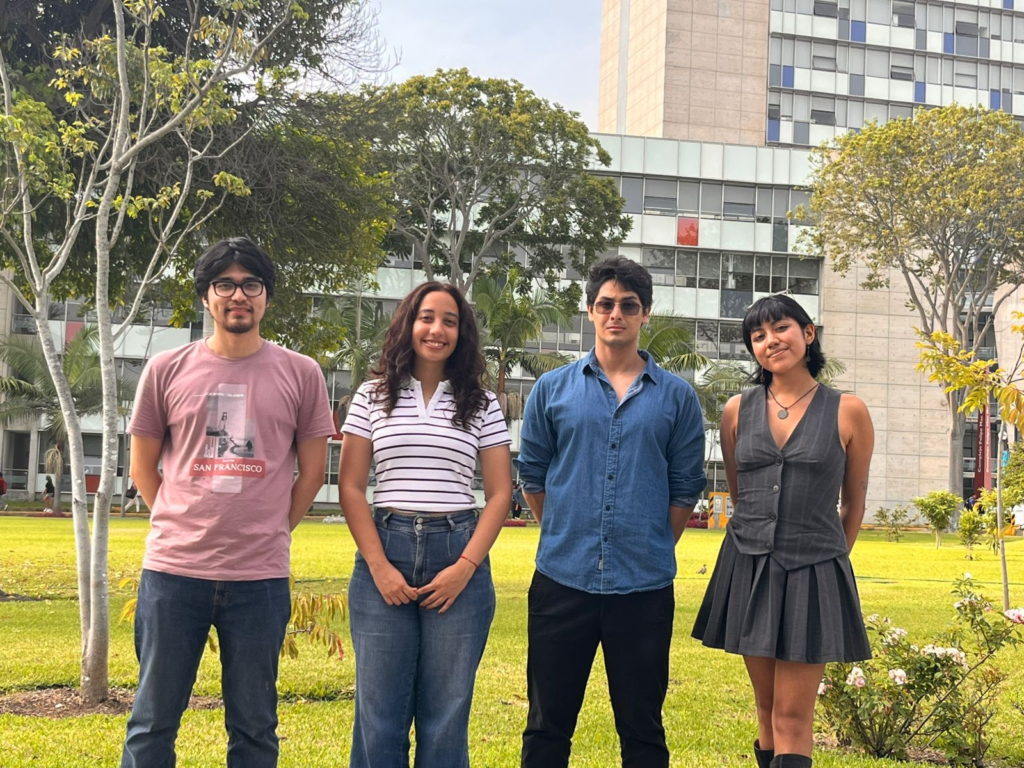
From left to right: Alonso Vásquez-Kanashiro, Brunella Basile, Gerardo Chávez-Lazo and Belén Muñoz
How Secuenciando works: text-based discussions and data sessions
Secuenciando follows a two-term format per year, each lasting approximately 14 weeks. Each term is called a ‘season’ and is typically structured around a theme (e.g., sequence organization, turn-taking, epistemics). Each week has one or more readings assigned to it, and participants are expected to choose and read one of them. We subsequently hold a two-hour meeting online, in which the first hour consists of a text-based discussion and the second one takes the form of an informal data session. In doing so, we ensure both constant engagement with the conversation-analytic literature and regular development of analytic skills through detailed observation of single extracts.
The aim of the text-based discussion is to provide a space for sharing our understandings, appreciations, doubts and comments about the week’s paper, ensuring a collective reflection on the contents, main arguments and data excerpts provided. A facilitator starts the session with a democratic round of free-form comments, in which attendees are invited to share any understanding, appreciation or doubt they had while reading the paper. While the facilitator formulates and summarizes the prior contributions, other members may collaborate in that discussion by adding their own views, interpretations and questions. Then, an open discussion follows, in which the most prevalent topics are developed. At the end of the hour, the facilitator closes the first part of the meeting with a summary of the main points discussed.
Immediately after that, the facilitator starts the data session—a dedicated space for unmotivated observation, analytic work and collective discussion, always centered on a small extract of audio or video interactional data. Its purpose is not to force connections between the data and the topics discussed earlier, but to let the participants inspect an extract of naturally occurring interaction with a focus on the sequential treatment of the event, and make close observations of it. So far, analytic attention has been directed exclusively to Spanish-language data and single extracts, but the possibility of working with other languages and/or collections is open.
Attendees usually come from diverse cultural and professional backgrounds, and that diversity is highly appreciated. Particular attention has been given to encouraging the involvement of individuals not previously acculturated into data session practices or conversation-analytic frameworks, including those outside the field of linguistics. This orientation has supported the development of an inclusive analytic community while fostering sustained attention to the practical and methodological dimensions of data session work. We expect future sessions to continue exploring these issues through collaborative analysis and open participation.
What we have done so far, and what is upcoming
Since its establishment, Secuenciando has already organized two seasons. The first one was primarily oriented toward introducing CA broadly as a paradigm, discussing its methodological foundations and considering potential applied uses, whereas the second one focused on sequence organization, adjacency pairs, their expansions, and other related aspects of that domain.
Apart from the regular seasons of intensive work, meeting, and discussion, this initiative is involved in the promotion of CA as a field of study in South America through other means. On its Instagram page, Secuenciando regularly posts CA-related informative content in Spanish, such as short biographies of important figures and their contributions. In addition, we have organized an introductory talk on CA in collaboration with Luis Manuel Olguín, and transcription workshops for newcomers joining any season. More posts, interviews, and workshops are expected for future occasions.
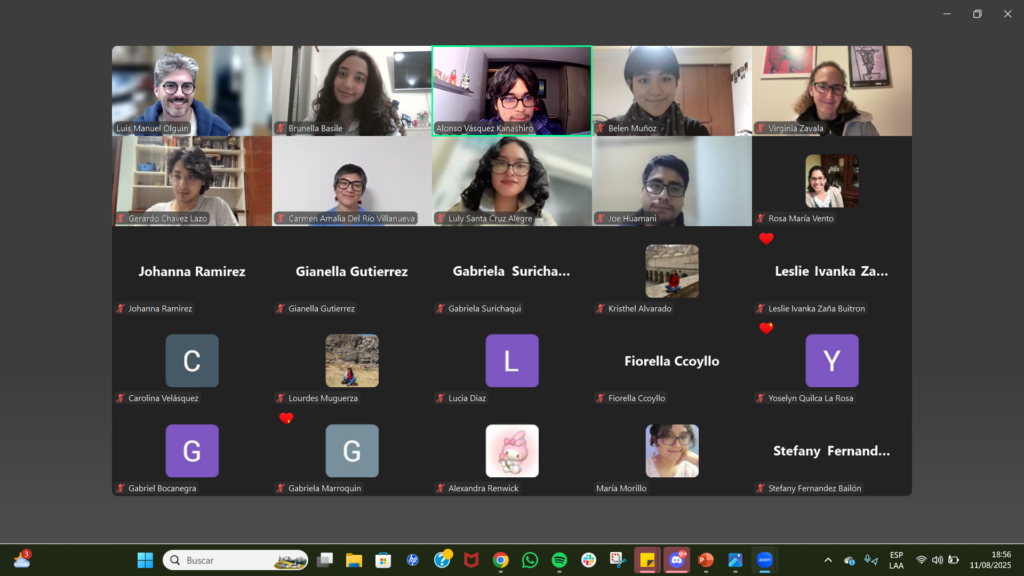
Talk with Luis Manuel Olguín, August, 2025: “Conversation Analysis Today: An Approach to Social Life”
Last summer, we offered simple, casual and non-themed data sessions for newcomers to CA who were interested in the field and were curious about how a data session works. These were called Open Data Sessions, and led to very participatory meetings, in which participants were encouraged to just use their shared common-sense knowledge to describe a data extract, allowing analytic observations to emerge through close engagement with the data. Simultaneously, new participants were invited to bring their own suggestions of public data extracts (e.g., podcasts) and members of the organizing committee offered to transcribe them for the weekly session. This format is expected to run annually from January to March, apart from the usual functioning of regular themed seasons. We believe it will promote the dissemination of the data session format as a way of doing social and linguistic inquiry with peers.
Currently, a third season is in progress. Its theme is turn design, and it covers aspects of turn construction, action formats, reference forms, recipient design and more. For anyone interested in joining, the following section details how to contact us and get involved.
How to participate in Secuenciando
We welcome anyone interested to join and participate, regardless of their level of expertise or interests. The only real requirement is a willingness to participate in Spanish, given that data is typically in that language and so are the discussions. As a member, you are encouraged to read one text per week (usually a book chapter or a journal article, no more than 30 pages), though there is no actual pressure to do so. Sessions are mostly online, though in-person sessions are occasionally held in Lima, Peru, for special or celebratory occasions. Meeting schedules vary each season according to the availability of recurrent members, but are primarily based on Peruvian/Colombian time (GMT-5). Details about the schedule for each upcoming season will always be available on our Instagram page weeks before it begins.
If you would like to join Secuenciando, do not hesitate to contact us at secuenciando.pe@gmail.com. All updates and current schedules are always announced on our Instagram page (https://www.instagram.com/secuenciando_pe/) and on our Bluesky profile (https://bsky.app/profile/secuenciando.bsky.social).